The Albino Child
Name of Student
Name of University
Course Title
Professor’s Name
Date
The Albino Child
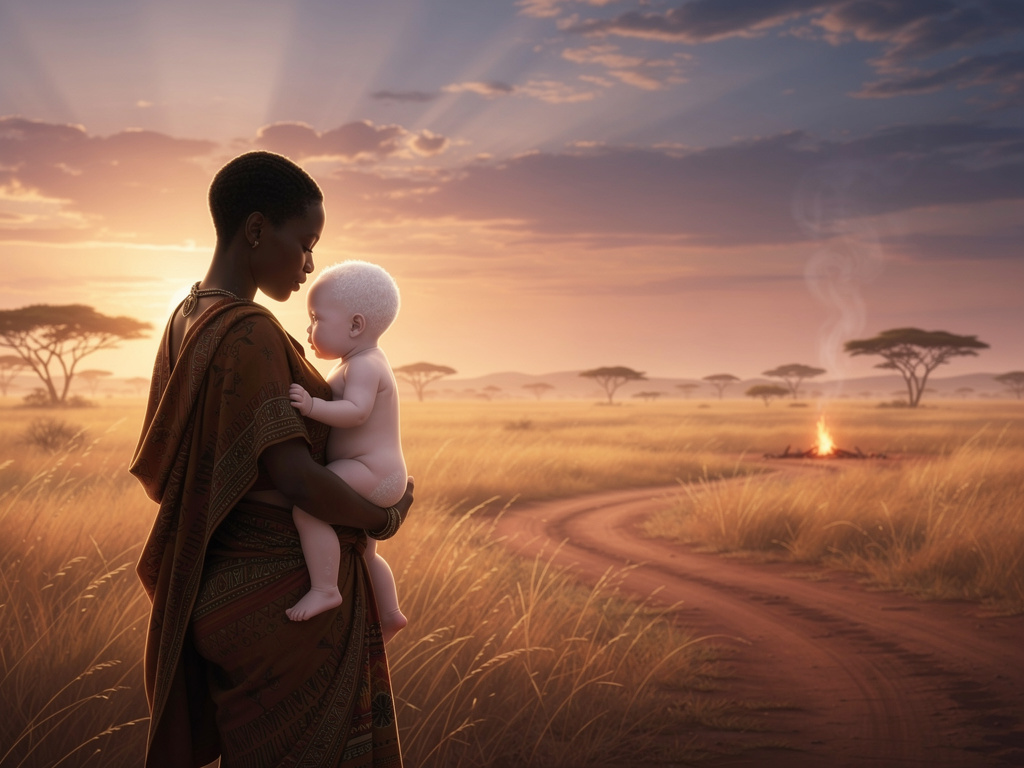
The pangs of labor hit me like a tornado. I groaned and moaned in excruciating pain as the fetus inside me turned and kicked as if it was demon-possessed. My bulging belly protruded out like a filled balloon, and I felt every inch of my skin stretch to the limit. Holding my shoulders firmly, the midwife asked me to push with all my strength. I clenched my teeth, closed my eyes, and thrust hard. As the baby’s head slid out, I saw the look of surprise on the midwife’ face. I cast my glance downward, and my heart sunk when I saw the baby’s bluish pigmented cheeks. Her skin was red, the veins in her hands visible through the translucent flesh. Her hair was white like wool, and her eyes a haunting hazy blue. In our culture, we called such babies the cursed seed of the white men who ruled our land. The elders believed that if a pregnant woman lusted after a white man, she would give birth to a baby like mine. The woman and her husband would be ordered to make a day-long trip to a far-away forest and dump the baby, lest the community get cursed with similar births for generations.
On the morning we were to leave the village, I held the baby in my hands and stared into her sleeping face. I knew she was strange, but the maternal bond was so strong that I cried in anguish. Setting out in the wee hours, we trekked for miles across the valley. As dusk was setting in, we met a group of white men returning from a tour in the Maasai Mara game reserve, and my husband approached them to ask for water. A woman in the group spoke to an interpreter, who in turn talked to us, inquiring about our problem. After a back-and-forth exchange, we were informed that our child suffered from a rare condition known as albinism. It was not a curse or bad omen but a genetic disorder. The white men assured us that the child will grow normally and that no curse will befall us if we raised her. The interpreter told us that the white men were a charitable organization helping poor people in Africa. The white woman spoke to her colleagues, after which she gave us food and clothes for the baby. She gave us directions to a temporary camp from where her organization was distributing donations. She promised us that her organization would provide free shelter and food until we were ready to settle at another place, far from my village, where our child would be safe.
I felt a new sense of hope, and life became promising again. I held my baby tighter as tears of joy rolled down my cheeks. I imagined all the children who had been dumped because of the elders’ superstitious beliefs about a condition they knew nothing about. For the first time since I went into labor, I was proud to be a mother. As we trekked across the savannah grassland towards the white men’s camp, I decided to embrace the white man’s religion and become a Christian.